
Different Types of Garden Trellis for Your Outdoor Space
- Terri Windover

- Mar 11
- 3 min read
Garden trellises do more than support climbing plants. They add structure, style, and privacy to outdoor spaces. Choosing the right type of trellis can transform your garden into a peaceful retreat or a lively gathering spot. This post explores various garden trellis types and how to use them creatively to enhance your yard.

Classic Lattice Trellis for Climbing Plants and Privacy
The lattice trellis is a timeless choice made from wood or vinyl. Its crisscross pattern provides excellent support for climbing plants like clematis, roses, or ivy. This type works well as a privacy screen along fences or patios.
Use lattice trellises to create green walls that block neighbors’ views.
Paint or stain the lattice to match your garden style.
Combine with flowering vines for seasonal color and fragrance.
A lattice trellis can also frame garden entrances or pathways, inviting visitors into a cozy, plant-filled space.
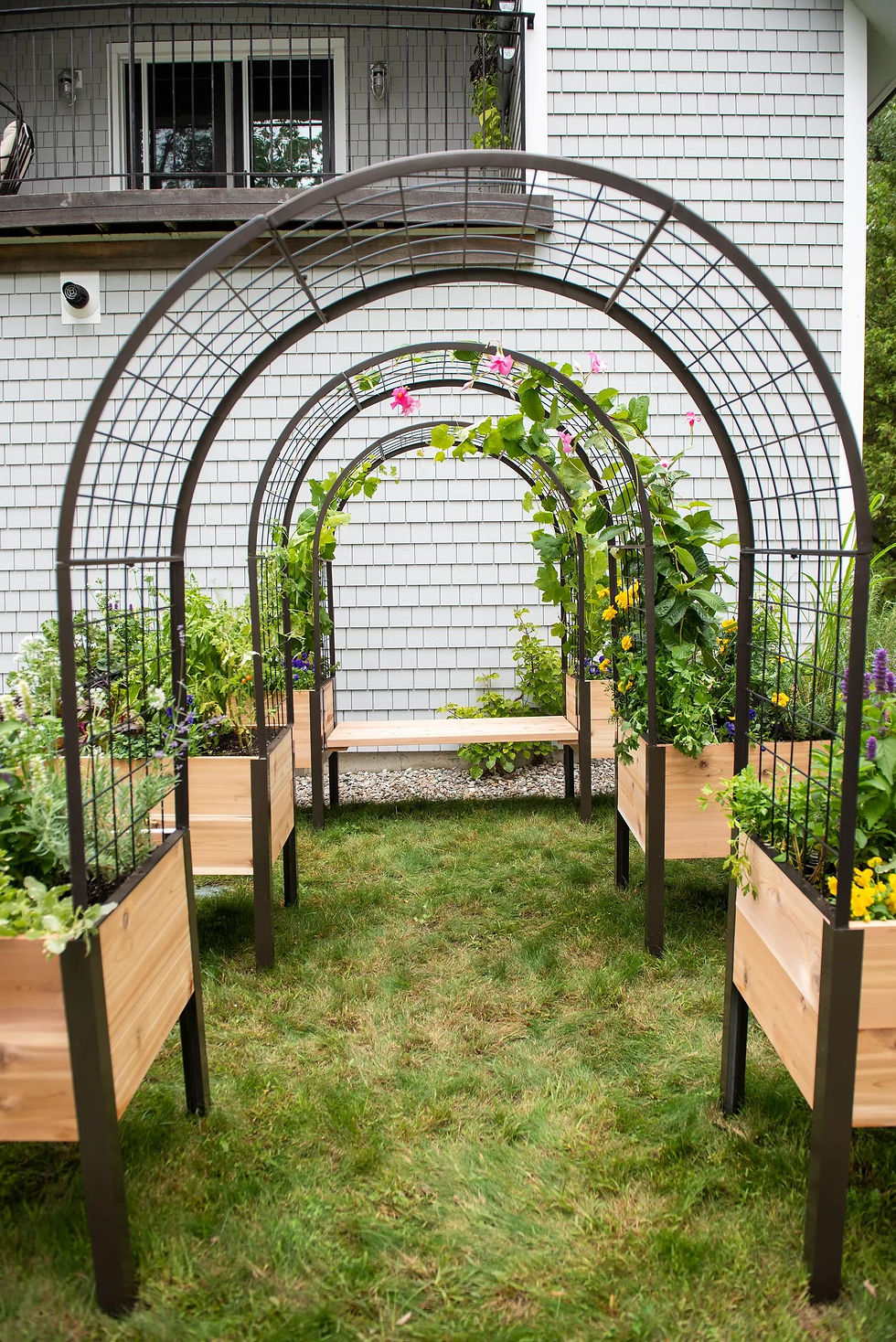
Arch and Obelisk Trellises to Add Vertical Interest
Arches and obelisks bring height and drama to gardens. These trellises are perfect for narrow spaces or as focal points.
Place an arch trellis over a garden gate or walkway and train climbing roses or wisteria to grow over it.
Use obelisks in flower beds to support clematis or morning glories, adding vertical layers to your planting design.
Group several obelisks together for a sculptural effect.
These structures encourage plants to grow upward, saving ground space and creating a dynamic garden silhouette.
Decorative Panel Trellises for Style and Function
Decorative panel trellises come in various patterns, from geometric shapes to intricate scrollwork. They serve both as plant supports and garden art.
Install panels along decks or patios to add privacy without blocking light.
Use panels as standalone garden dividers to create separate zones.
Paint panels in bold colors to contrast with greenery.
These trellises work well with climbing plants that don’t need heavy support, such as jasmine or honeysuckle.

Bamboo and Sapling Trellises for a Natural Look
For a rustic or tropical vibe, bamboo and sapling trellises offer a lightweight, eco-friendly option.
Use bamboo panels to create a natural fence or backdrop for potted plants.
Build simple teepee trellises for beans or peas in vegetable gardens.
Combine with tropical plants like passionflower or mandevilla for a lush feel.
These trellises blend seamlessly into natural landscapes and are easy to move or replace.
Metal Trellises for Durability and Modern Design
Metal trellises, often made of wrought iron or steel, provide strong support and a sleek look.
Choose metal trellises with clean lines for a contemporary garden.
Use rust-resistant finishes for long-lasting outdoor use.
Combine with climbing plants like clematis or grapevines for a striking contrast between metal and foliage.
Metal trellises can also serve as garden gates or decorative accents on walls.

Tips for Choosing and Using Garden Trellises
Consider plant type: Heavy vines need sturdy trellises, while delicate climbers prefer lighter structures.
Match your garden style: Rustic, modern, classic, or tropical trellises should complement your overall design.
Think about placement: Use trellises to create privacy, define spaces, or add vertical interest.
Maintenance matters: Wood may need sealing, metal might require rust protection, and bamboo should be checked for wear.
Mixing different trellis types can add variety and function to your garden.
Bringing It All Together
Garden trellises offer endless possibilities to enhance your outdoor space. Whether you want to create privacy, support climbing plants, or add artistic elements, there is a trellis type to fit your needs. Experiment with lattice, arches, panels, bamboo, and metal to find the perfect combination that reflects your style and garden goals.


Comments